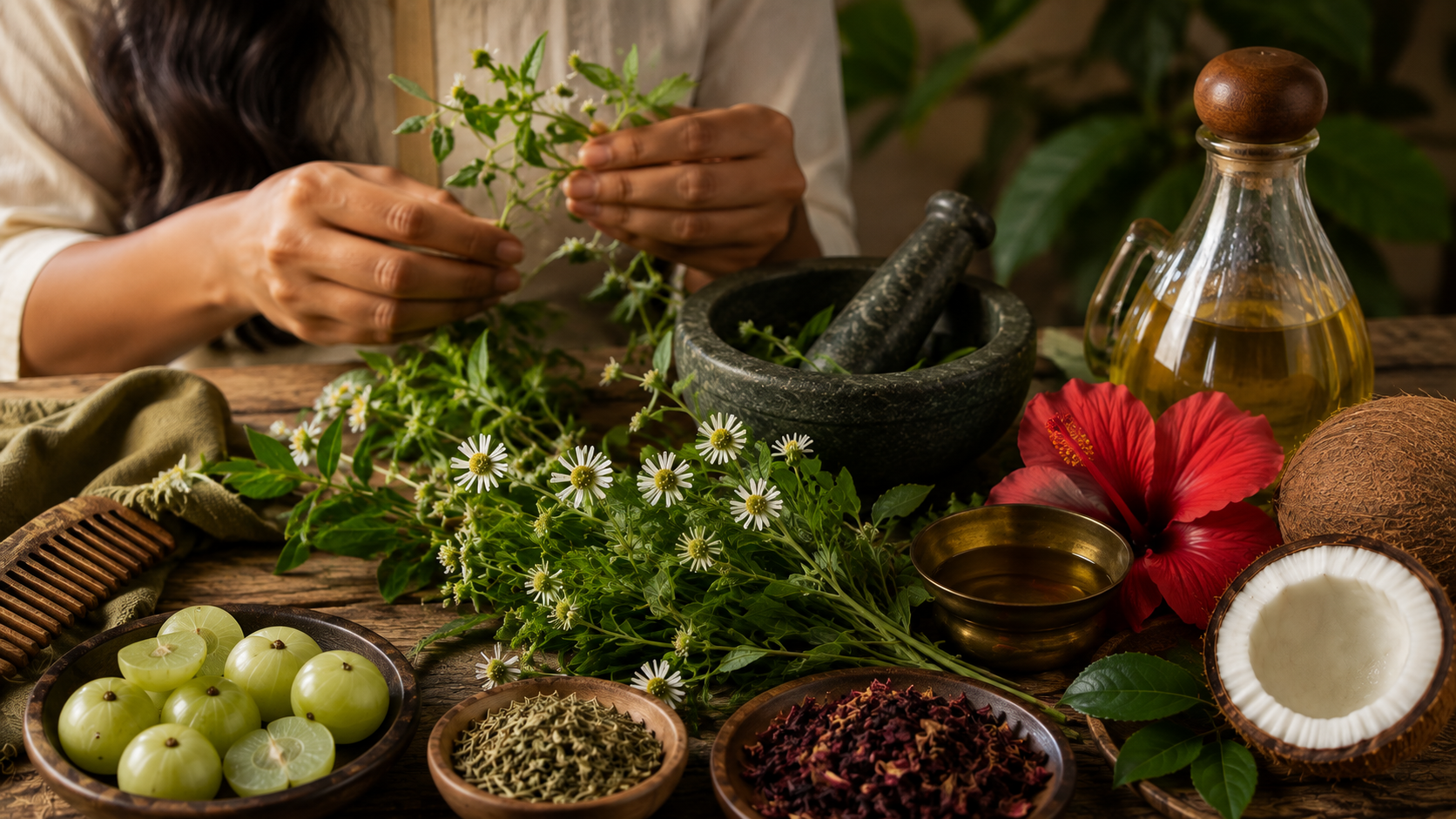
Some herbs become popular because of social media.
Others become popular because a new study suddenly puts them in the spotlight.
Guduchi doesn’t belong to either category.
Long before wellness became an industry, Guduchi was already part of Ayurvedic practice. In fact, if you spend enough time reading about traditional herbs, you’ll eventually run into another name for it: Amrita.
The word translates to something close to “the nectar of immortality.”
That’s a pretty remarkable nickname.
Guduchi, also known as Tinospora cordifolia, is a climbing shrub with heart-shaped leaves that has been used in Ayurvedic formulations for generations. You’ll find it in discussions about daily wellness, traditional herbal preparations, and classical Ayurvedic texts.
What’s interesting is that Guduchi rarely tries to steal the spotlight.
It’s often part of a larger formulation.
And that tells you something about how Ayurveda approaches wellness.
Modern products often focus on a single ingredient.
One ingredient.
One benefit.
One promise.
Traditional formulations tend to think differently.
Instead of isolating one herb and expecting it to do everything, Ayurveda often combines several botanicals that have historically been used together.
Guduchi is a good example of that philosophy.
Another reason Guduchi remains relevant is that it’s surprisingly adaptable.
You’ll find it in powders.
Capsules.
Decoctions.
Traditional preparations.
Modern formulations.
Very few herbs manage to move comfortably between ancient practices and contemporary wellness routines.
Guduchi has done exactly that.
There’s also something worth mentioning here.
Many people begin paying attention to wellness only when something feels off.
Maybe it’s a busy work schedule.
Maybe it’s irregular eating habits.
Maybe it’s a lack of routine.
But wellness doesn’t usually begin with a product.
It begins with everyday habits.
Regular meals.
Better sleep.
Hydration.
Physical activity.
Small, consistent choices.
Traditional herbs have always been part of that larger conversation rather than a replacement for it.
That’s why Guduchi continues to appear in Ayurvedic formulations even today.
Not because it’s trendy.
Because it has remained part of the tradition.
How Testohold fits into this
Guduchi is one of the key ingredients in Testohold Liver+, an Ayurvedic formulation that also includes Nisoth, Yastimadhu, Pitpapda, Haritaki, Kasni, Bhuiamla, and Ghrit Kumari.
Instead of focusing on a single botanical, the formulation brings together several herbs traditionally associated with liver wellness.
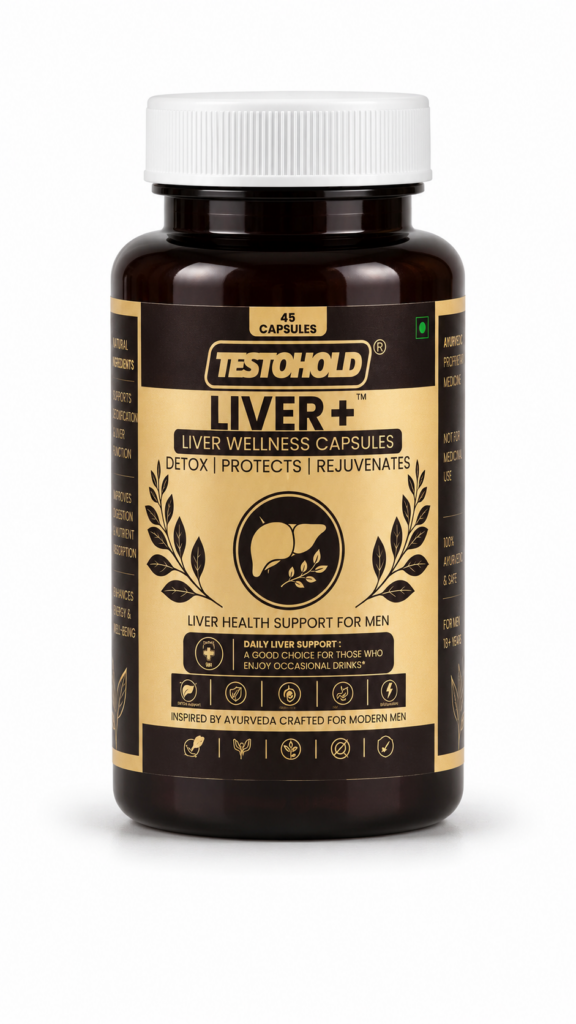
If you’ve started paying more attention to your daily routine, it may be worth looking beyond individual ingredients and exploring formulations built around complementary herbs.
Explore more Ayurvedic wellness products at Testohold.com.
For product information, call +91 85449 60024.
Frequently asked questions
What is Guduchi?
Guduchi is an Ayurvedic herb scientifically known as Tinospora cordifolia.
Why is Guduchi called Amrita?
In Ayurvedic tradition, Guduchi is sometimes called Amrita, a name associated with longevity and vitality.
Is Guduchi used on its own?
It can be, but it’s also commonly included in multi-herb Ayurvedic formulations.
What does Guduchi look like?
Guduchi is a climbing plant with distinctive heart-shaped leaves.
Why does Guduchi appear in so many Ayurvedic products?
It has been part of traditional Ayurvedic practice for centuries and continues to be used in a variety of formulations.